Dust treatment in drone production
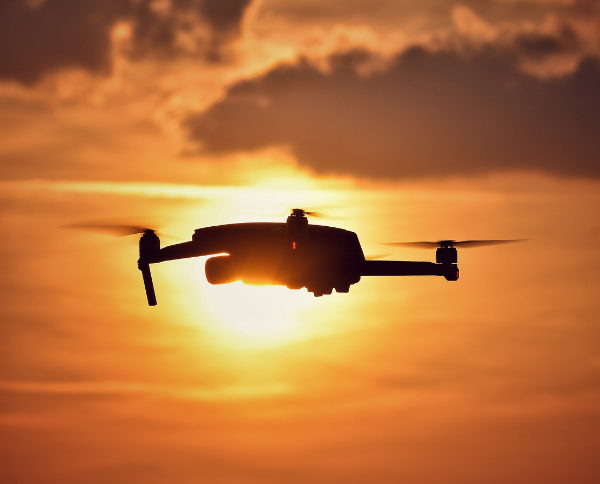
In this case study, we present a project developed together with one of our long-standing partners for a Portuguese company active in the aerospace and defense sectors, specializing in drone production. The use of aluminum made the ATEX version necessary to prevent explosion risks, while the processing of Necuron generated very fine dust, difficult to manage with previous systems.
Problems
- Necuron dust is very light and does not easily fall into the hopper.
- Risk of accumulation inside the system due to the insufficient slope of the hopper.
- Need to account for the occasional presence of explosive dust.
- Limited space, which ruled out standard solutions.
Technical features PC ATEX
- Airflow rate: 7,000 m³/h (determined by the machine manufacturer)
- N. 1 of suction points (closed machine)
- Fan motor: 1 x 7.5 kW
- Installation: outdoor
- Piping supply: not included (provided by the partner)
HF provided a dust extraction system specifically designed to meet the requirements of Necuron processing. The PC9 ATEX version was selected, a closed unit equipped with a more steeply inclined hopper, an integrated final filter, and a cleaning system that is more effective for handling fine dust. The decision to use the PC9 model, rather than the more common PC8, was based on both functional needs and layout constraints. The ATEX version was chosen to ensure a high level of safety, particularly when processing materials that may occasionally present an explosion risk, such as aluminum.
- Optimal fine dust handling
- Increased operational safety
- More efficient cleaning system
- Layout-tailored solution
- High-level integrated filtration


Here your clicks weigh less on the environment. We are using the Xpeis® technology that optimizes the energy expenditure to make this site work and the server that hosts it.